community • Saturday, April 4, 2026
Echoes of the Axe: How Thurston County’s Timber Past Fueled the Great War
From biplanes to battlements, Olympia’s timber history played a massive role in WWI. Here’s why that legacy still shapes our local housing and land use today.
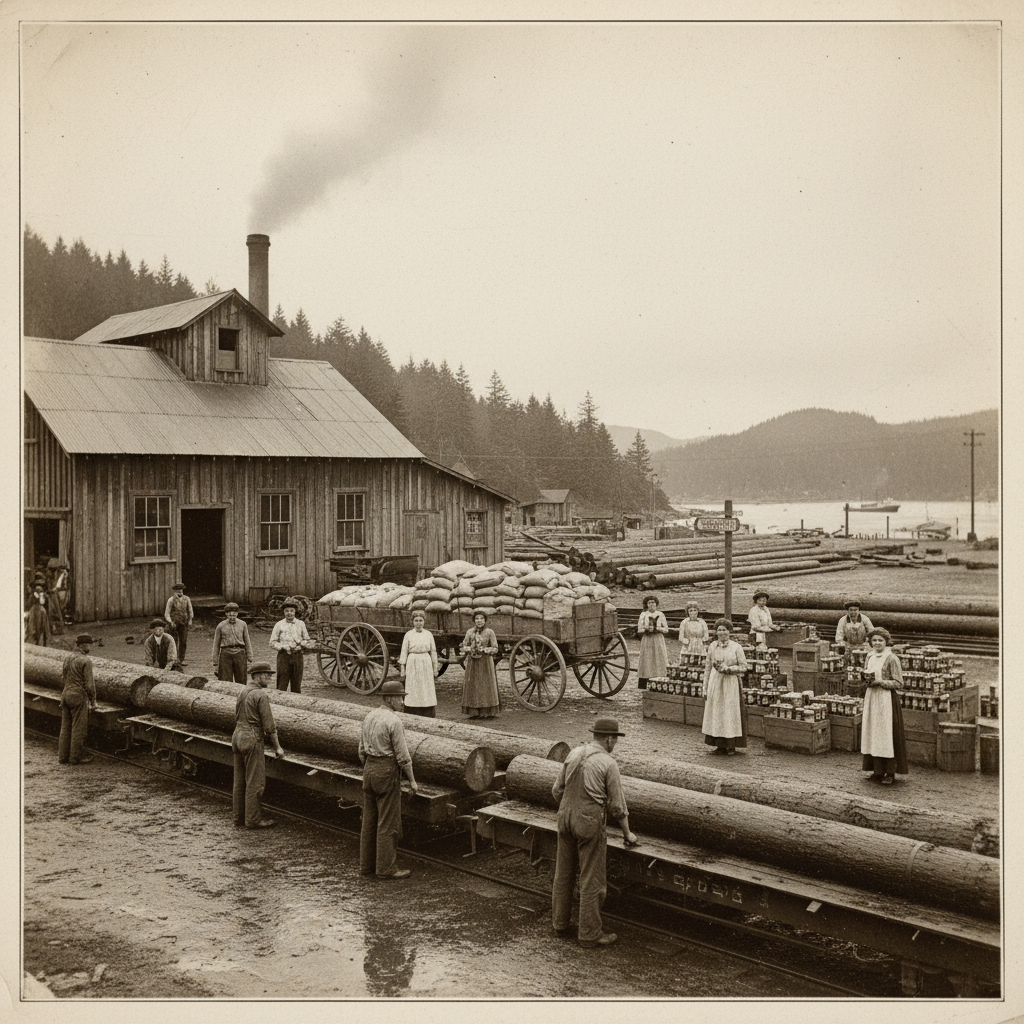
Next time you’re hiking through the lush corridors of Capitol Forest or driving past the historic mill sites along West Bay, take a second to listen to the wind in the Douglas firs. You aren’t just looking at scenery; you’re looking at a landscape that once served as the industrial backbone for a global war effort.
A recent retrospective from *The Columbian* highlighted the massive role Washington’s lumber industry played during World War I—specifically the Spruce Production Division. While the article focuses on our neighbors in Clark County, the ripples of that era were felt deeply right here in Olympia and throughout Thurston County. It’s a chapter of our local history that often gets overshadowed by the politics of the Capitol, but it is fundamental to who we are.
### When Olympia Logs Took Flight During the Great War, wood wasn't just for building barracks; it was a high-tech military asset. The lightweight, strong spruce found in the Pacific Northwest was essential for building the biplanes of the era. Imagine the bustling activity at the Port of Olympia and the local mills that once lined the waterfront. Thousands of soldiers—members of the “Spruce Squadrons”—were deployed not to trenches in France, but to the forests of Washington to ensure the flow of timber didn't stop.
For Thurston County, this meant a massive infusion of labor and infrastructure. Our rail lines, many of which are now popular “Rails-to-Trails” paths like the Chehalis Western Trail, were the arteries carrying the materials that would eventually soar over European battlefields.
### Analysis: The Shift from War Machine to Urban Growth What I find fascinating as a local observer is how these “historical pivots” (as *The Columbian* aptly puts it) dictate our current debates over housing and land use. The vast timber tracts that were once considered “strategic reserves” for the military eventually became the suburban developments of Lacey and Tumwater.
We often talk about the housing crisis in Olympia as a modern phenomenon, but it is inextricably linked to this industrial past. The way our forefathers mapped out timber sales and rail lines a century ago created the geographical “bones” of the South Sound today. When we argue about thinning forests versus preserving old growth, we are participating in a conversation that began when the US government realized just how valuable our backyard really was.
### Why This Matters Locally * **Land Use Context:** Understanding that our modern urban areas were once high-intensity industrial timber zones helps us navigate current zoning and density discussions. * **Economic Heritage:** Many of Olympia’s legacy families can trace their roots back to the mill workers and loggers of this era, anchoring our community identity in labor and resourcefulness. * **Conservation Balance:** It serves as a reminder of the resilience of our local ecosystem. Landscapes that were once heavily harvested for the war effort have, in many cases, been reclaimed as vital recreational and ecological spaces like Capitol Forest.
### A Legacy Beyond the Mill As we look forward, we have to ask ourselves: what is our generation’s version of the “Spruce Production”? While we aren't felling timber for biplanes anymore, we are tasked with a different kind of production—building sustainable housing and protecting the very natural resources that once defined our global contribution.
Thurston County has always been a place that “makes things” for the world. Whether it was WWI lumber or today's state-level policy, we punch above our weight.
**OlyTimes Readers:** When you look at the remaining wooded patches in your neighborhood, do you see them as a link to our industrial past, or a blueprint for our future growth? Let’s talk about it in the comments.
Tags: history, timber, Thurston County, Olympia, World War I